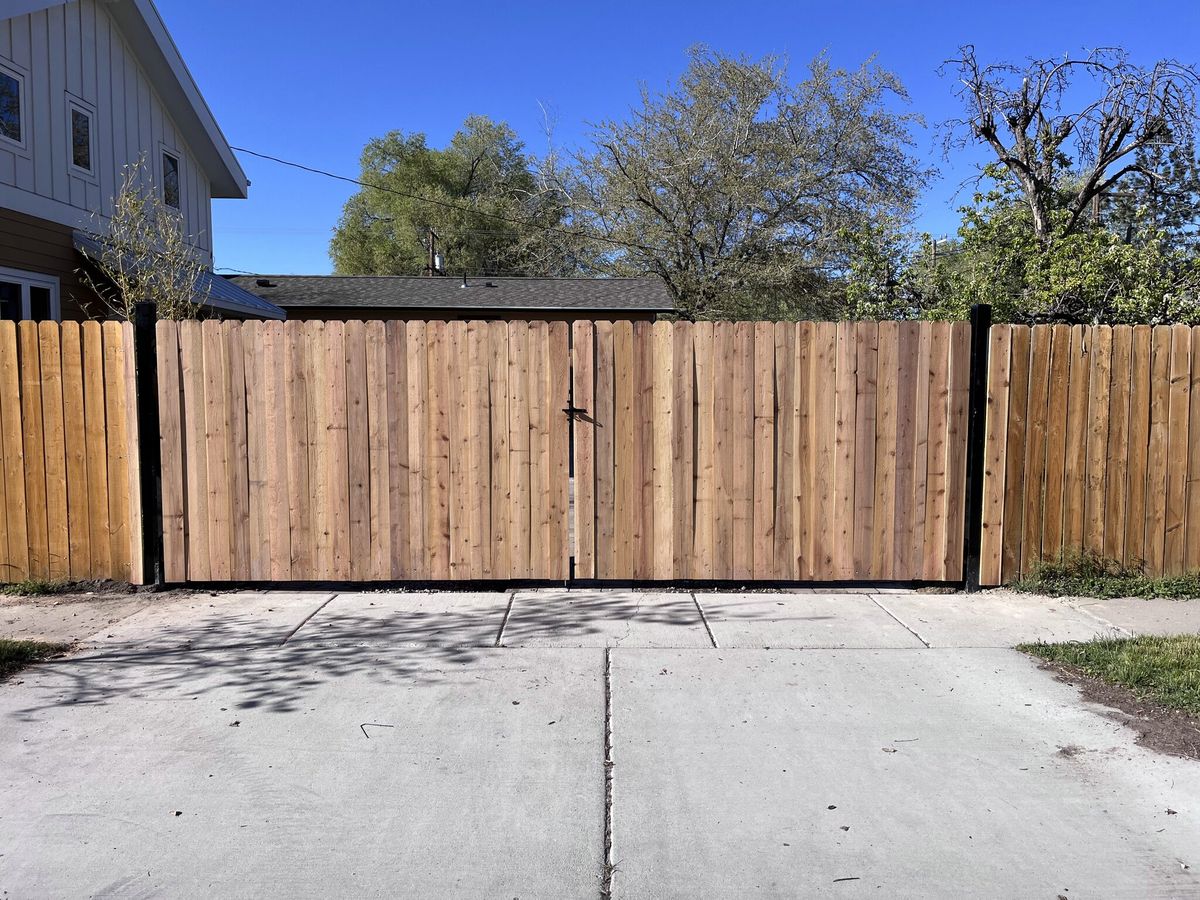
Wood Fence Installation in Salt Lake City, UT Cedar Built to Hold Its Line
A leaning fence gets worse with every windstorm, and so does the bill. We answer every call the same day, walk your line for free, and build cedar that stays plumb through Utah winters. Call (801) 341‑9099.
Most people call us unsure which one they're looking at. Walk your fence line and tick anything you see. No email, no form, just the answer we'd give you standing in your yard.
Your cedar line is your privacy, your pet's boundary, and your property line, and when it starts to lean, all three are on the clock. Wind works on a loose panel every day, and one failed footing drags its neighbors down with it. We install cedar fencing across Salt Lake City with same-day responses and free on-site estimates, so you get a real answer fast.
Signs Your Cedar Line Is Past Saving
Short answer: Bad pickets alone do not mean a new fence. Bad footings do. If more than about a third of the run shows movement at the base, you are looking at replacement, and putting it off just moves the cost to a worse day.
Watch the uprights, not the pickets. If one shifts when you push on it, water or rot has reached below grade, and that section is living on borrowed time. Panels that lean after a storm, gates that drag, and fence rails pulling their fasteners all point the same way.
Two tests you can run today
Sight down the line from one end, the way you would check lumber for a crown. Straight is fine. A line that waves means the soil has already moved the footings, and that is structural rather than cosmetic. Then press your thumb into the base of an upright. Soft, spongy, or crumbling means water has been sitting there a long while.
Movement at the base of any upright when you push the panel
A wave in the line when you sight along it from the corner
Soft or crumbling wood where the upright meets the soil
Gaps opening between the picket bottoms and the grade
Gates that drag, will not latch, or have pulled away from their hinge upright
Fasteners backing out of gray, splintered cedar
What the weather is actually doing
Gray, splitting pickets are a different problem. That is Utah's high-altitude sun pulling the life out of unsealed cedar, ugly first and weak second. Rot at the bottom rail means sprinklers or grade are soaking the run from below. Western red cedar is naturally decay resistant, but the USDA wood-fence protection guidance shows that heartwood content, contact with soil, and moisture protection still decide how long it lasts.
Here is the honest math. A few bad pickets on solid posts do not justify a new fence, and we will not try to sell you one. Failing footings every few sections? Replacement usually costs less than chasing failures one windstorm at a time. We will tell you which side of that line you are on, for free. If it turns out you only need a finish, we will say so and quote staining and sealing instead.
How Salt Lake Valley Soil Decides Your Post Placement
Short answer: Freeze-thaw and clay soil move the earth here every year. Every upright is set two feet deep in a concrete mix rather than tamped dirt, and gate uprights go deeper and heavier than line posts.
Salt Lake City is hard on cedar in ways milder places aren't. Freeze-thaw cycles work on a footing a little more each spring, and the valley's clay-heavy soil swells when wet and shrinks when dry, which drives that movement as much as the cold does. Anything merely tamped into dirt has nothing holding it against that.
Why the concrete matters more than the lumber
So every post hole takes a concrete mix, not backfill, and gate uprights go deeper and heavier than line posts because a swinging gate loads its hinge harder than any straight run ever sees. That one detail separates a fence that holds its line from one that needs a crew back out.
Where you are in the valley changes the spec
The clay-heavy west side, through West Jordan, Herriman, and Riverton, holds water against footings, so drainage matters as much as depth. Canyon winds off the benches in Holladay, Cottonwood Heights, and Draper catch a loose fence panel like a sail. High-altitude UV bleaches unsealed cedar fast anywhere in the county. On older central-city lots we hit buried fill, broken concrete, and debris from past construction more often than people expect, which is why Landon walks the line himself before a number goes out.
Season changes the approach without changing the outcome. Late fall digs need extra care once the earth starts hardening. Early spring can mean soil saturated with snowmelt, which changes how a concrete mix sets around an upright. Many valley HOAs also set height and style rules, and we spec yours to pass. We build across Sandy, Murray, Millcreek, Taylorsville, and every city in Salt Lake County.
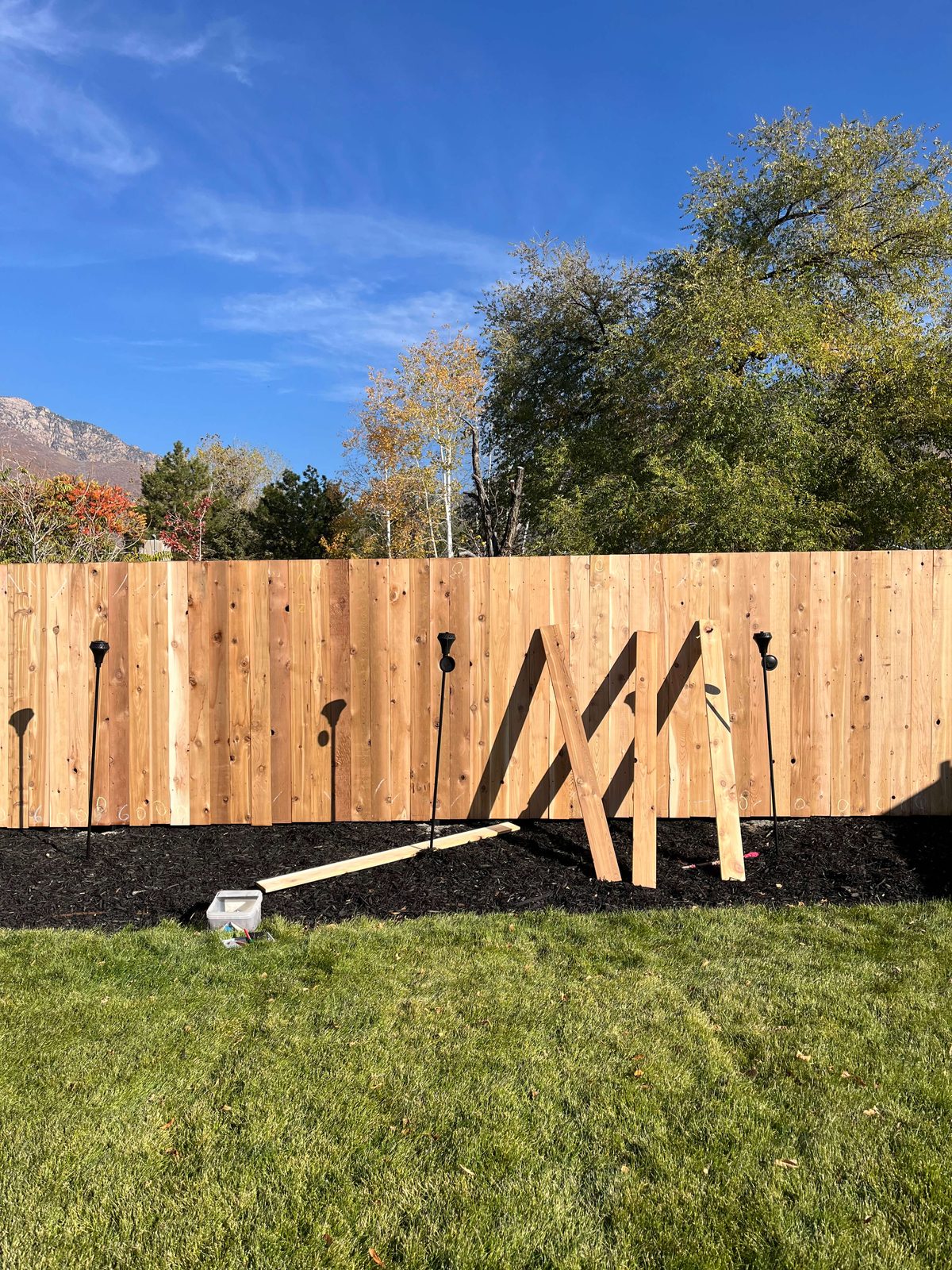
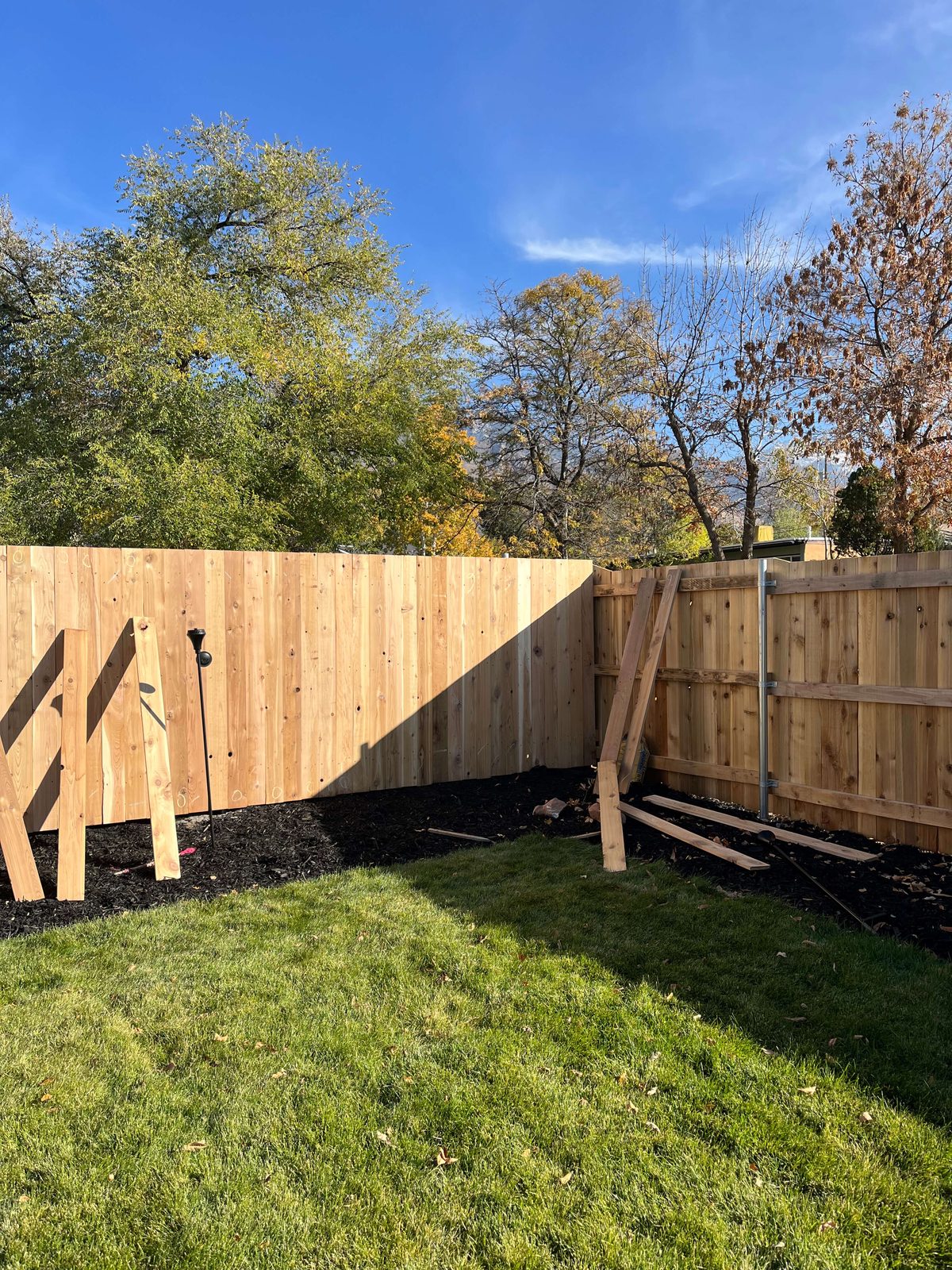
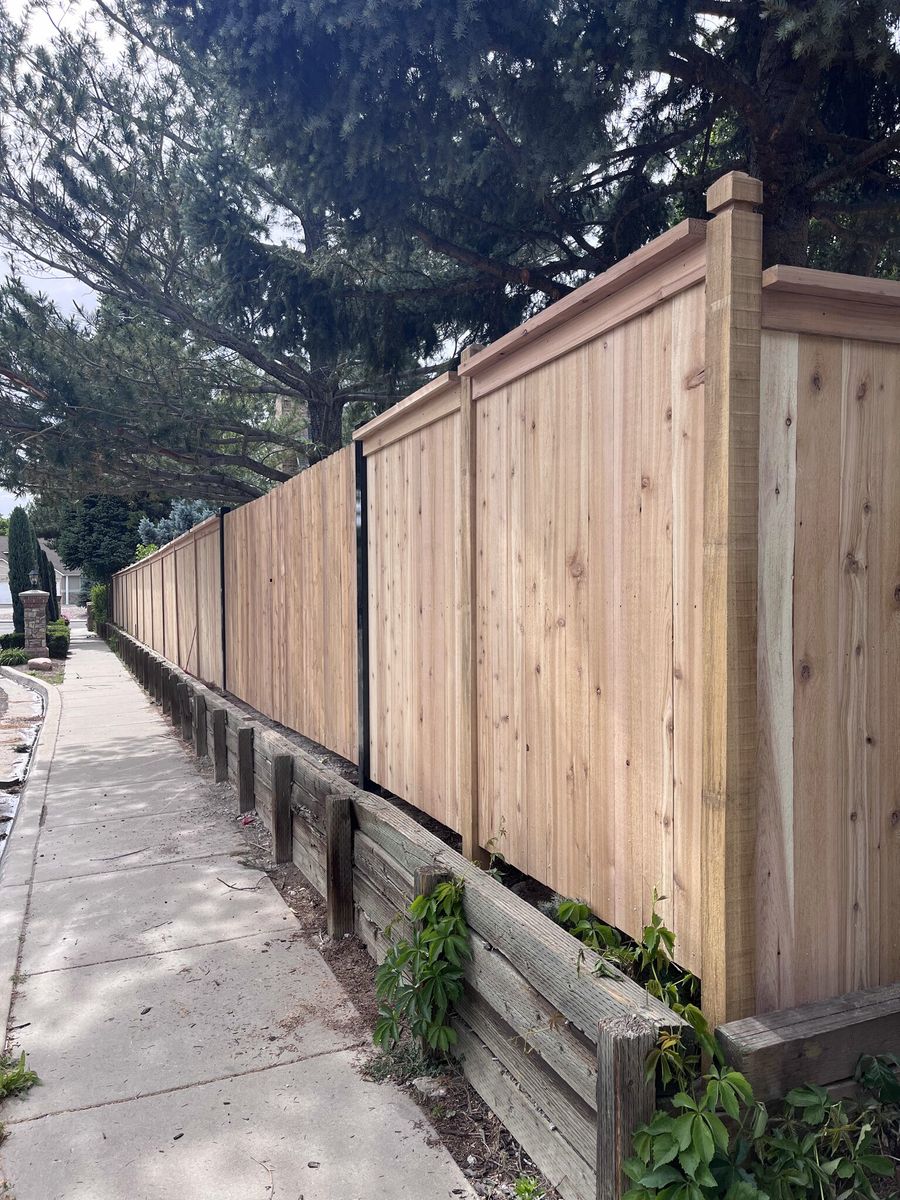
Cedar going up on a valley lot. Layout marks still on the pickets, Wasatch front behind.The corner on the same job. Panels staged, bracing in, footings cured before anything gets hung.
● RECENT WORK
Wood fences we've built.
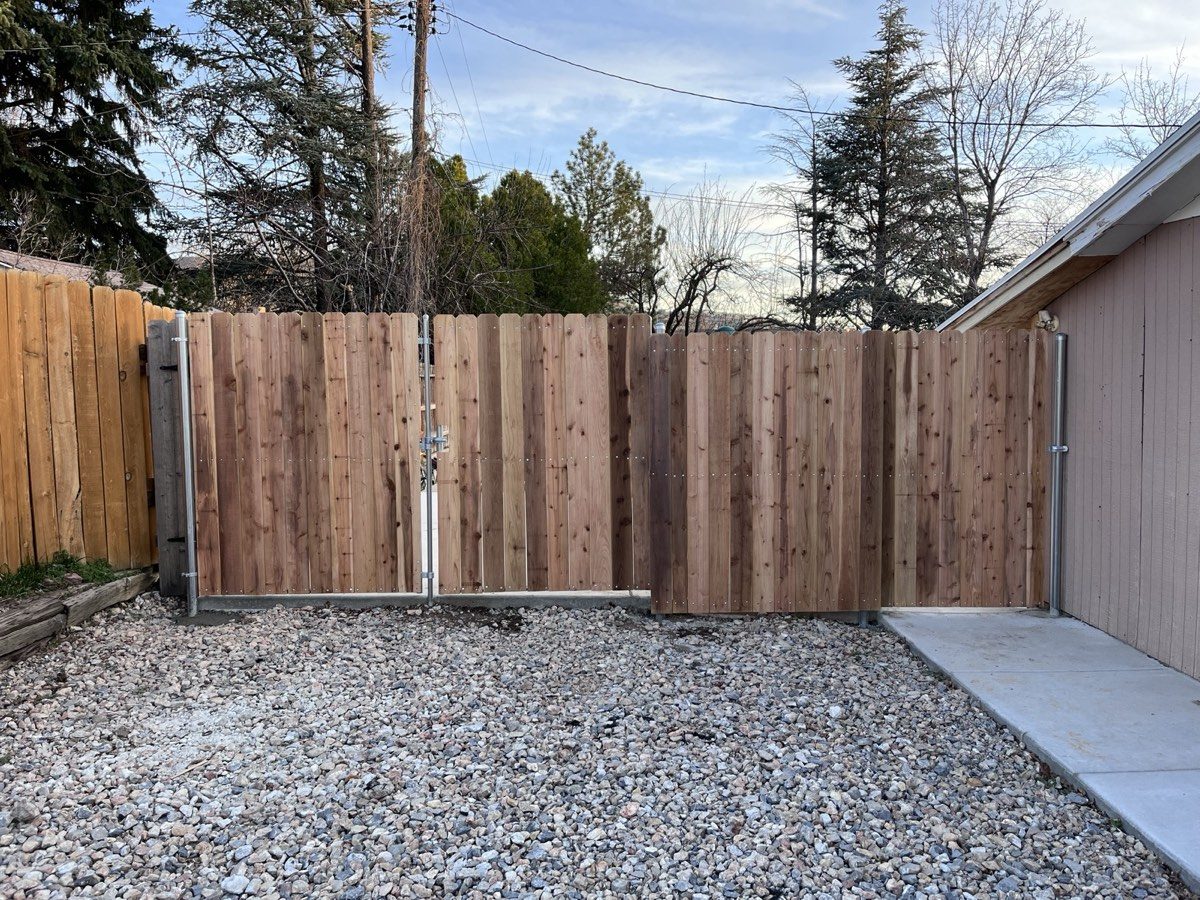
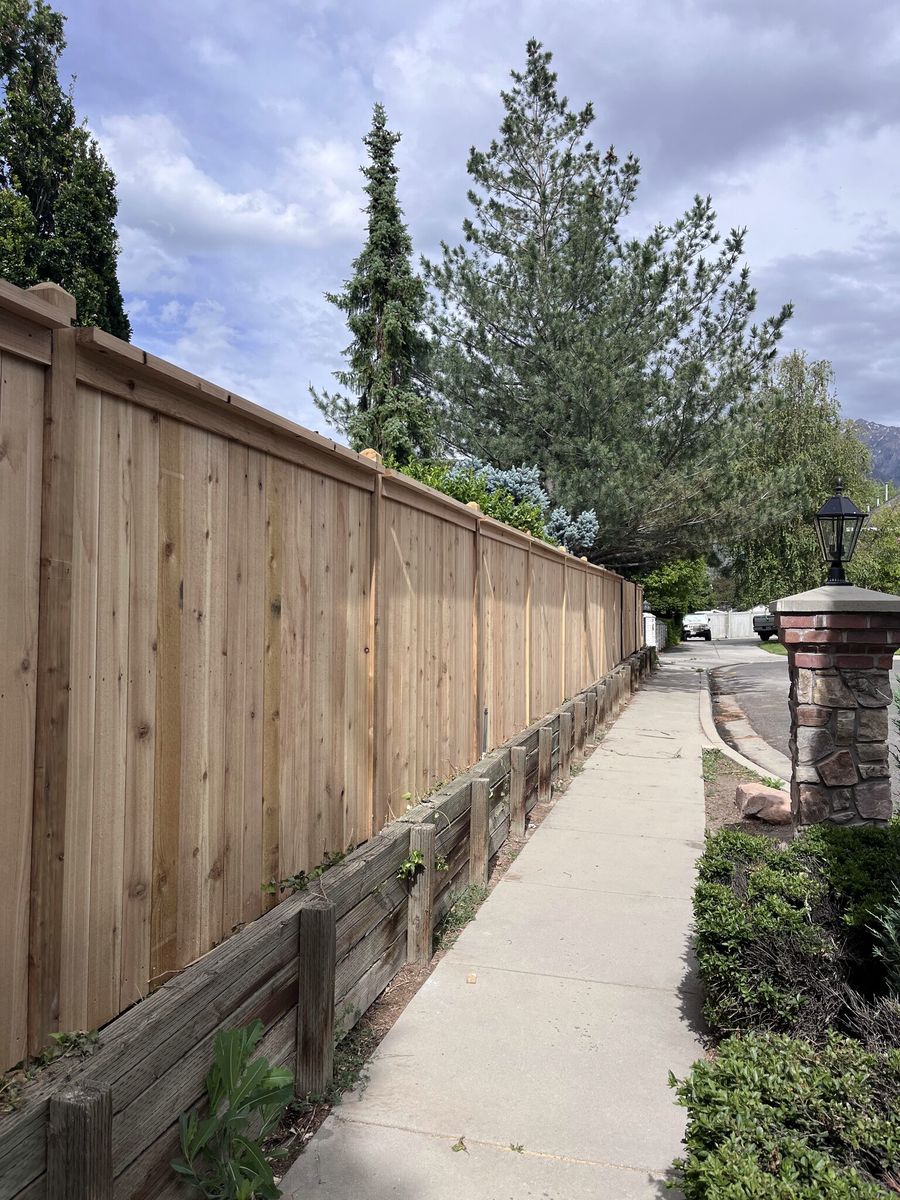
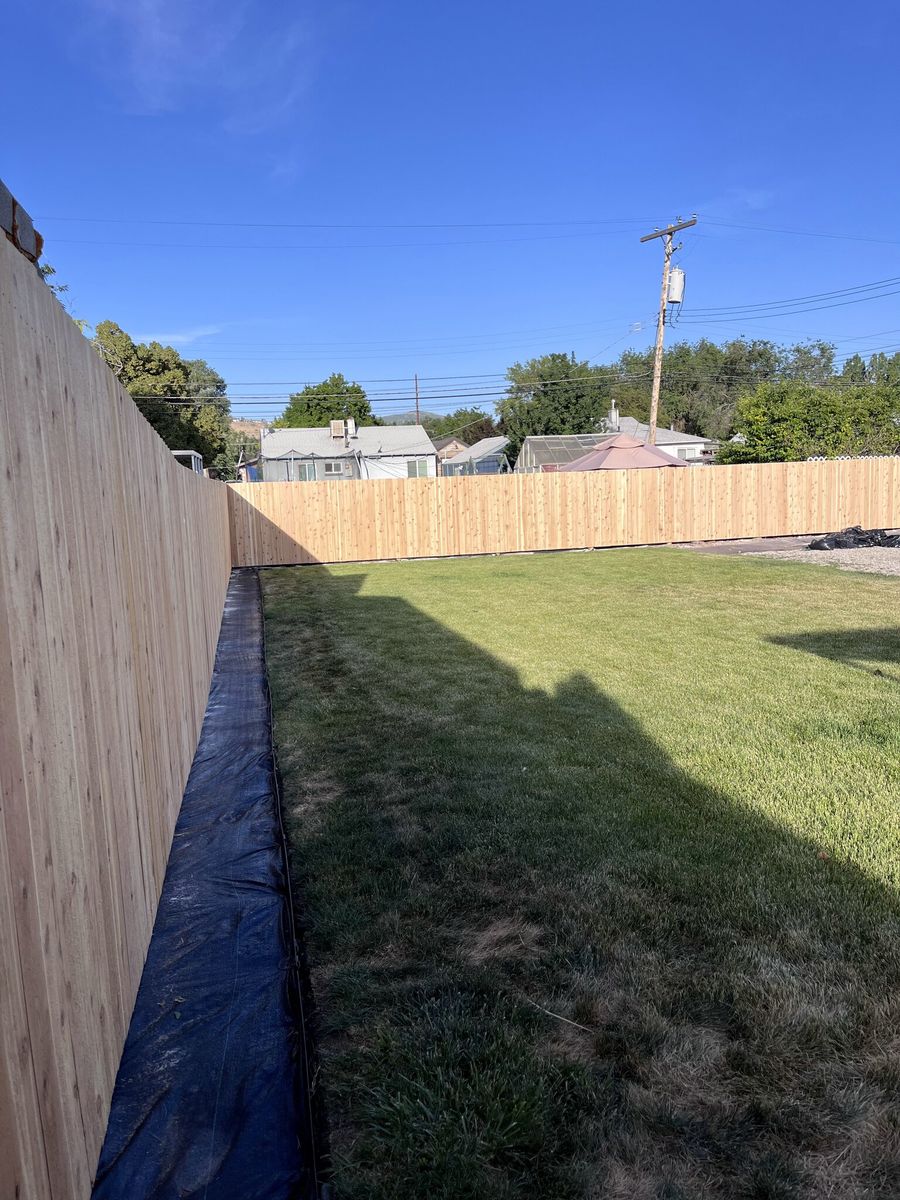
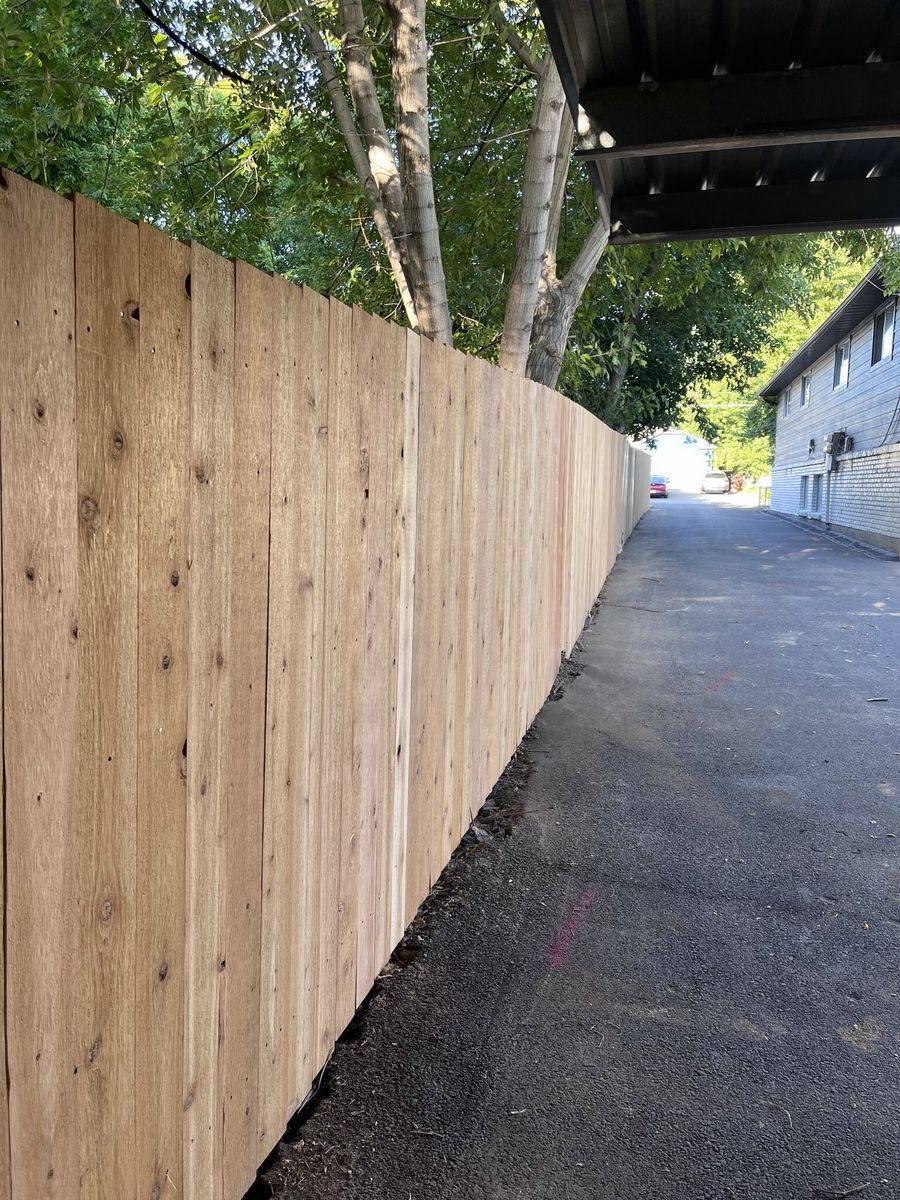
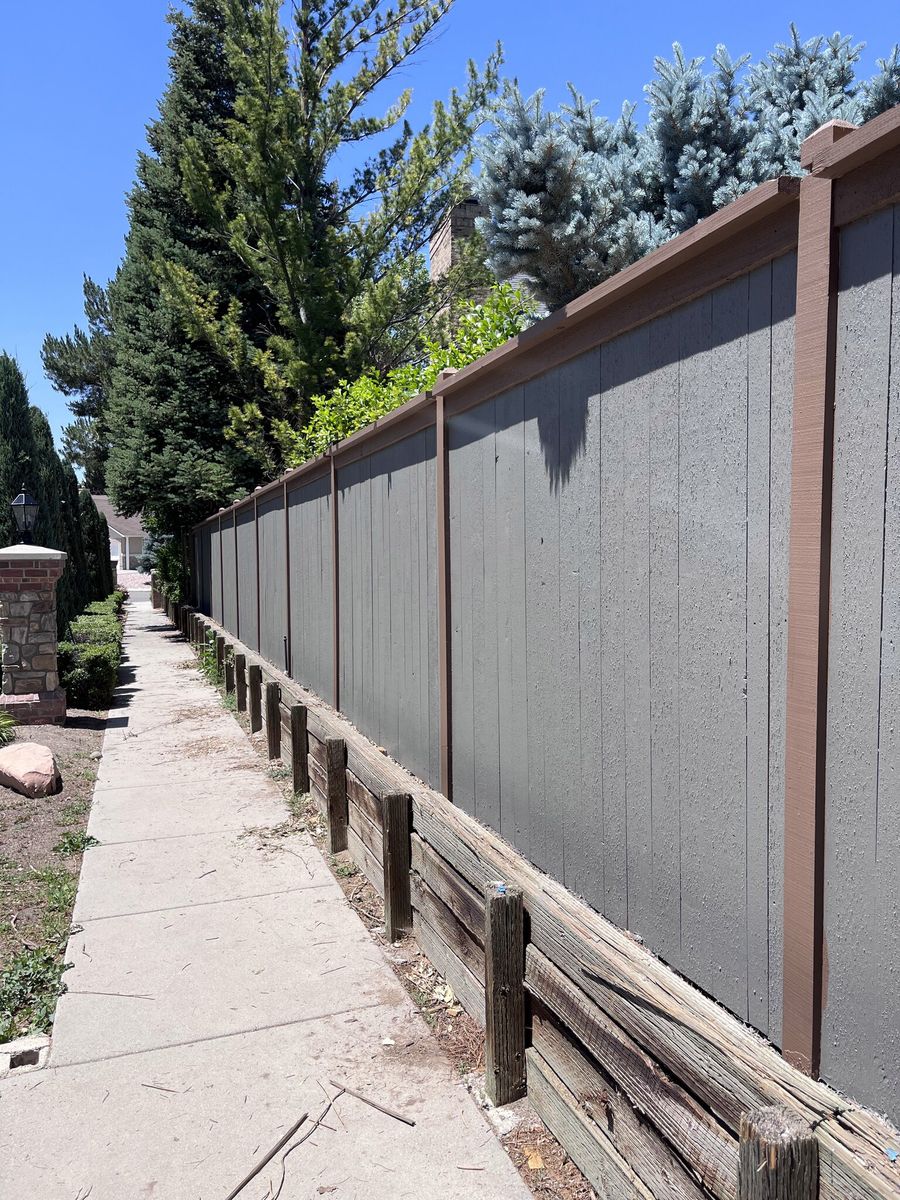
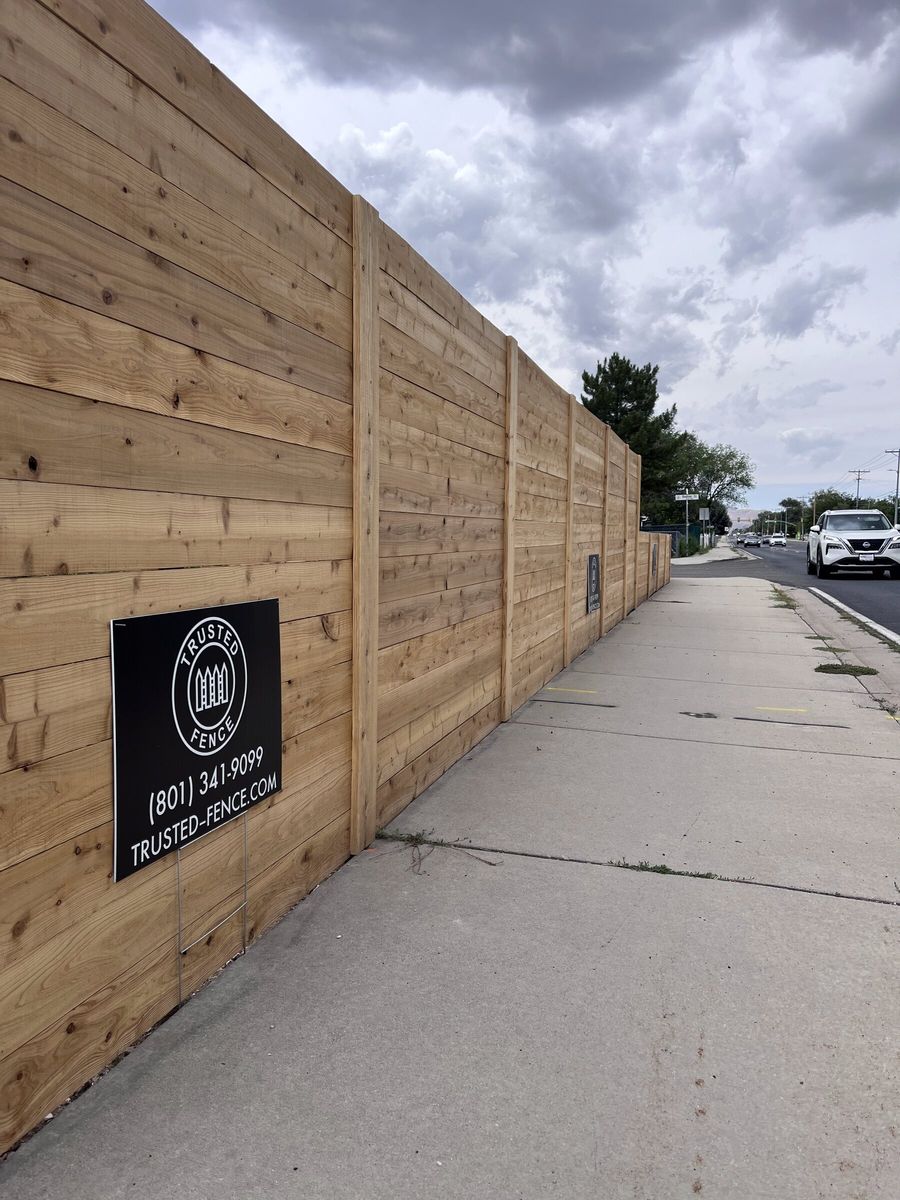
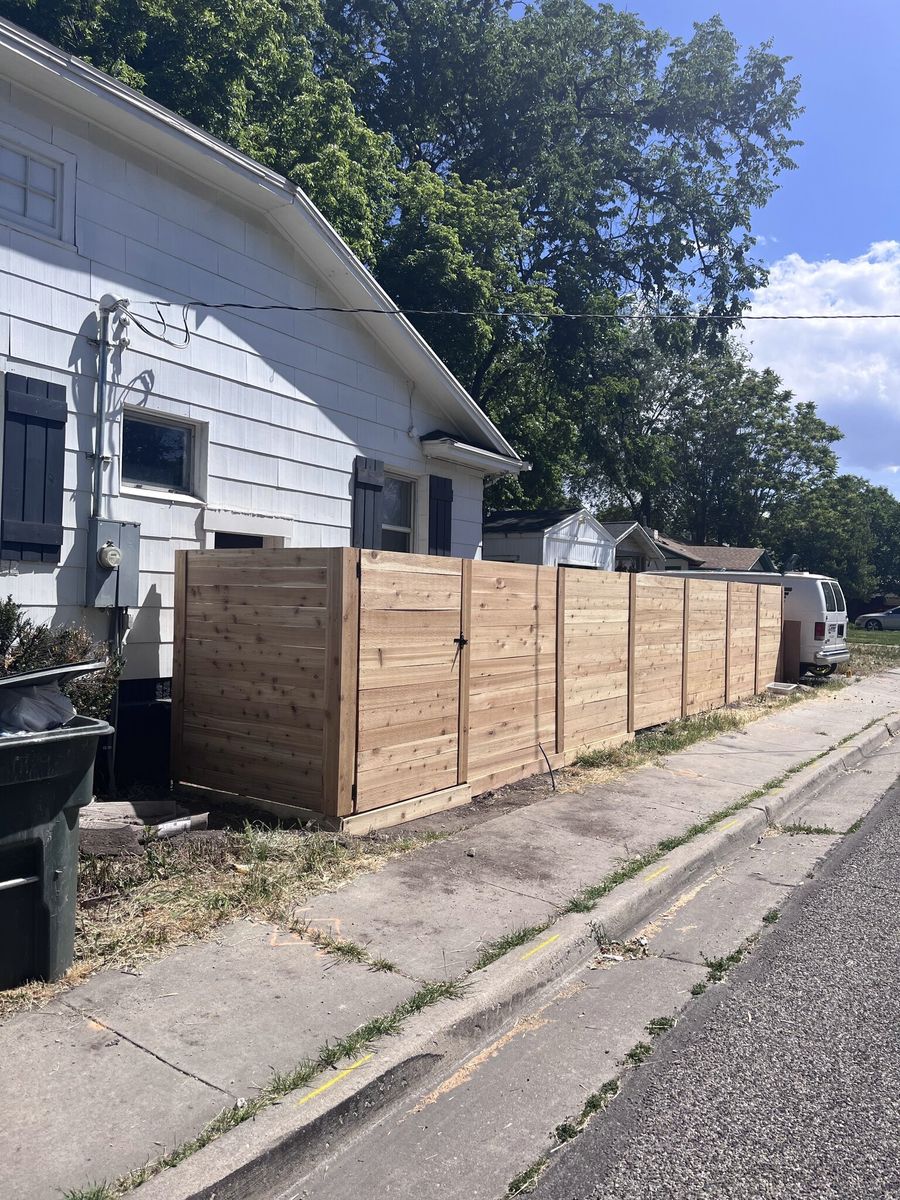
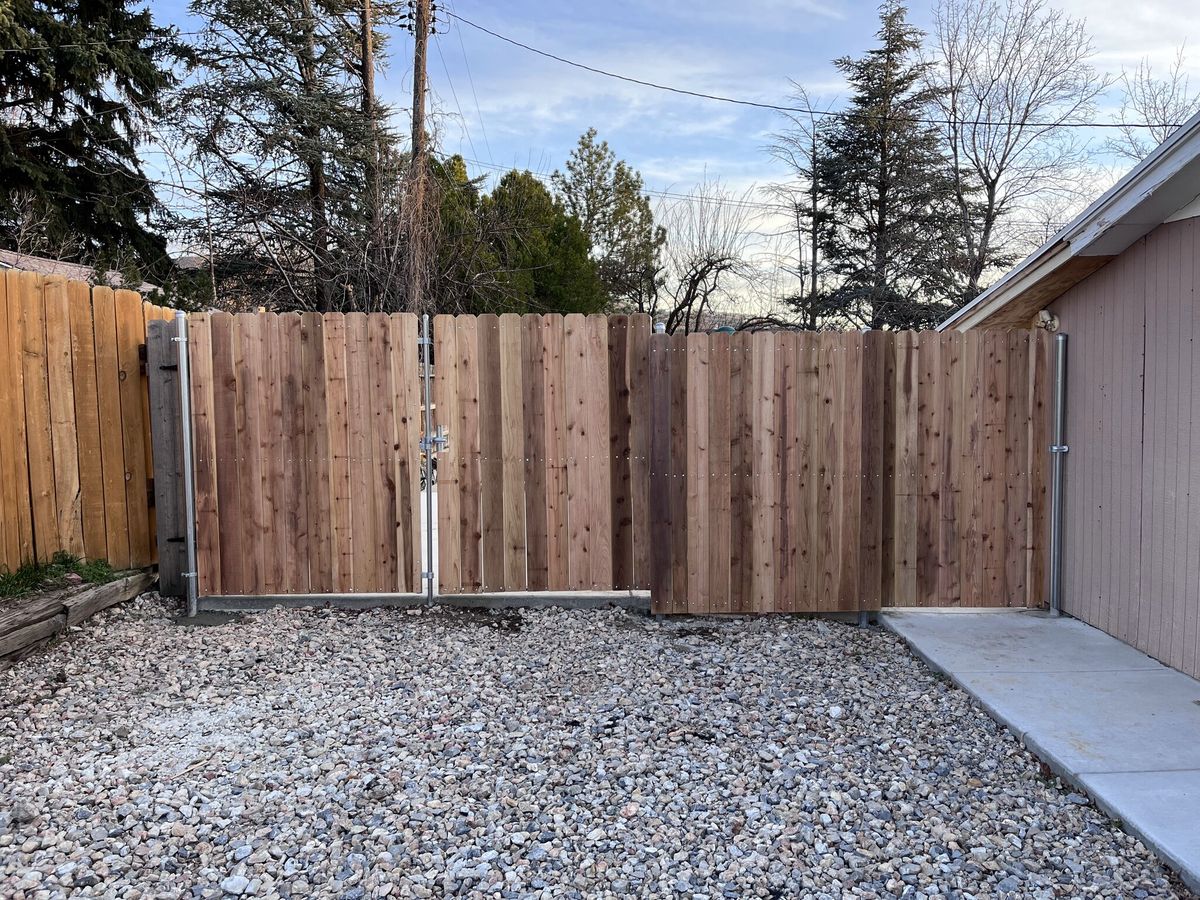
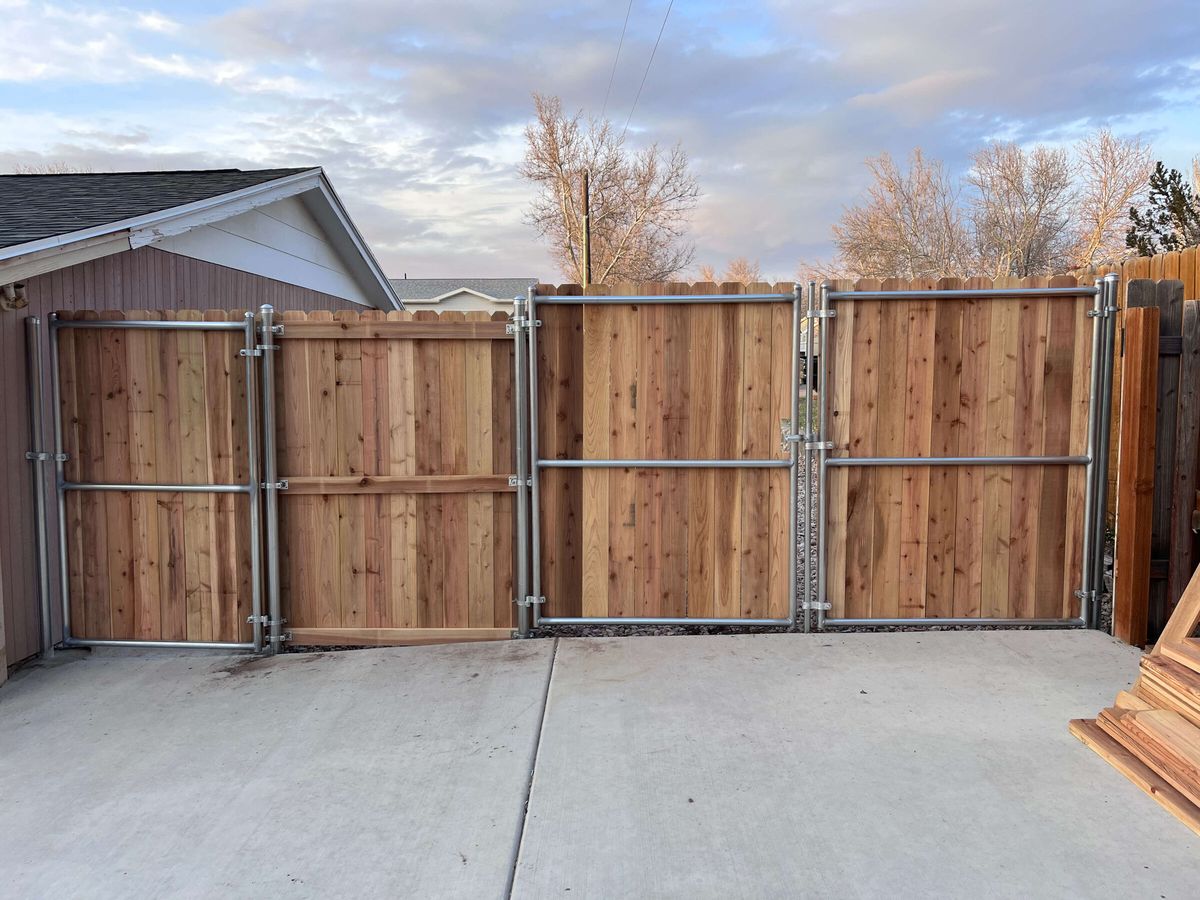
Cedar privacy fenceAlong a sidewalk · Millcreek, UTCedar privacy fenceCapped corner post · Millcreek, UTCedar privacy fenceBackyard perimeter · West Valley City, UTWood privacy fenceSide-yard run · West Jordan, UTGray wood privacy fenceBrown trim · Millcreek, UTHorizontal wood fenceStreet-side run · Salt Lake Valley, UTHorizontal wood fenceWalk gate · Taylorsville, UTCedar privacy fenceDouble drive gate · Bountiful, UTWood privacy fenceDouble drive gate · Herriman, UTHorizontal wood fenceDouble drive gate · Midvale, UT
What Happens on Install Day
Short answer: Six stages, always in the same order. Skipping the plumb check on every upright is the single most common reason a line waves by year two.
Stage 01
Mark the Line
We set it against your property stakes or plat, so there is no guessing where the boundary sits and no conversation with a neighbor later.
Stage 02
Dig Every Post Hole
Line posts go two feet deep, and gate posts and 8-foot fences go deeper. Post placement is measured, not paced, so panel spans stay even from corner to corner.
Stage 03
Set in Concrete, Checked Plumb
Each upright takes a concrete mix rather than tamped dirt, and every one gets checked plumb before it cures. This is the stage crews rush. We don't.
Stage 04
Hang the Fence Rails Level
Fence rails go up across the whole run once footings are cured, adjusting to your grade rather than forcing a straight line across uneven yard.
Stage 05
Hang the Pickets
Pickets go on evenly spaced and squared to the rail, whether that is solid board-on-board or a shadow box fence.
Stage 06
Walk the Finished Line
Together, before final payment. Gates swing right, nothing loose, site cleaned. Plumb, level, square.
About that plumb check on every single upright: skip it once and you are chasing a wave by the time you reach the back corner. Landon estimates the job and runs the site, so the person who measured your yard is the same one checking the line before you pay.
What Drives the Cost of a Cedar Fence
Short answer: Footage, gates, cedar grade, height, and what the soil does to the dig. Anyone quoting your yard over the phone without seeing it is guessing.
Pricing isn't one flat number, and it moves on a handful of real factors. Landon walks every property himself before writing a bid, which is how you get a number that holds.
Cedar grade and picket choice, which we show you in person, board against board
Height, and whether your HOA has rules that set it
Site conditions: slope, rock, old tree roots, buried fill
Whether a dead run has to come out and get hauled away first
Finish work, which we quote up front rather than mentioning later
The question most homeowners forget to ask
How deep are the uprights going, and what is holding them there? Anything set in tamped dirt costs less on the invoice and more within a few winters. That is a real difference in this valley, not a scare tactic. Before you hire anyone, ask what the number actually includes: haul-away, gates, cleanup, and the finish. A written, itemized estimate protects you, and it is what we hand every customer before installing anything.
If budget is the driver, we will price a style mix: solid where you need screening, picket where you don't, so the money goes where it works. See the full list of fence services if you are weighing materials.
Watch
See a Cedar Line Go Up
Loads only when you press play, so it never slows the page down.
When Staining Beats Replacing
Short answer: If the footings are tight and only the pickets look tired, a finish buys years back for a fraction of the cost. The uprights decide it.
Not every cedar run needs to come out, and we would rather tell you that now than after we have taken it down. If your uprights are still solid and only a few pickets are cracked or weathered gray, you are not looking at a rebuild.
Push a section and watch where it moves. Movement at the base usually means rot below grade or a cracked footing, and no finish fixes that. Sway at the top with a solid base is a smaller problem. If the base is tight and it is the pickets showing sun-bleaching or minor splitting, staining and sealing can add years back. Replacement is the answer when more than about a third of the pickets have gone, when uprights move at the base, or when the run leans as one unit rather than sagging piece by piece.
Not sure which you have? A fence inspection answers it in one visit, and you get a straight yes or no.
Cedar Styles We Build
Every run starts the same way: we walk your line, measure it, and set each upright in a concrete mix. From there the style is yours.
Solid board-on-board for full screening, the classic choice for privacy fencing between close-set homes
Shadow box, which looks finished from both sides, so neither household stares at fence rails. See shadow box fencing
Picket and split rail where you want a boundary rather than a wall, including split and ranch rail
Matching gates, from a walk gate to a full double drive gate. That is our gate installation work
Cedar needs protection in this climate, so we quote staining and sealing up front. Sealed cedar keeps its color for years instead of graying out in two summers.
What to Expect
Call or send the form and you will hear back the same day. We walk your property line for free, no trip fee, measure it, and talk styles and cedar grades on the spot. Within days you get an itemized written quote: material, footage, gates, teardown if needed. That number is locked.
Most runs take one to three days on site once material arrives, and we give you a start window we actually hold. Before final payment we walk the line together: plumb, level, square, site cleaned. You will know your crew, your start date, and who to text if anything comes up. If weather pushes a day, you hear it from us first, not from an empty driveway.
Why Homeowners Keep Calling Us Back
Cedar is most of what we build, and customers keep sending their neighbors. Landon walks your line and writes the quote himself, then a crew that shows up on the promised day sets it right and hauls the old run away when they leave. You get a free estimate, no trip fee, an insured crew, and a written price that doesn't move. If something is not right at the final walk-through, we fix it before we are paid. That is the satisfaction guarantee, with no fine print.
We are not the biggest fence company in the valley, and that is the point: small enough that the owner knows your job by name, careful enough that the level comes out on every upright. Trusted Fence is a locally owned Salt Lake City fence company, and cedar is where we started.
With posts set in concrete and the wood sealed on schedule, cedar commonly lasts decades here. Bare, unsealed cedar grays within a couple of summers and gets brittle far sooner. Staining is what separates those two outcomes. For a wider comparison, see how cedar, vinyl, and composite hold up in Utah.
Should I stain a new cedar fence right away? +
Not the same day. Cedar needs to dry out first, but not for long: think days or a few weeks, not months, because sun starts breaking down bare cedar within about a week. We quote staining up front so it gets planned instead of forgotten. Our guide to when to stain a new cedar fence covers the timing in more detail.
Can you build a wood fence on a slope? +
Yes. We either step the panels or rack them to follow your grade, so there's no gap under the fence. We'll tell you which method suits your lot at the estimate.
How do I know if my wood fence needs replacing? +
Posts decide it. A few bad boards with solid posts don't call for a new fence. If more than about a third of the line shows posts moving at the base, soft wood, or gaps underneath, the ground has already worked on it and it's time to replace. Sight down the fence line: if it waves, that's a foundation problem, not a cosmetic one.
Why do wood fence posts start to lean here? +
Freeze-thaw and clay soil. The valley's clay-heavy ground swells when it's wet and shrinks when it dries, and that movement works on a post every year. A post that was only tamped into dirt has nothing holding it against that. Ours go two feet deep in concrete, with gate posts deeper and heavier than line posts.
Is spring or fall better for a wood fence install? +
Both work, they just need different handling. Late fall digs need extra care once the ground starts hardening. Early spring can mean soil saturated with snowmelt, which changes how concrete sets around a post. Neither is a dealbreaker. We adjust to the conditions on the day.
Your fence is leaning a little more every week.
Get ahead of it. Call (801) 341‑9099 for a same-day response and a free on-site estimate, the number we write down is the number you pay.