
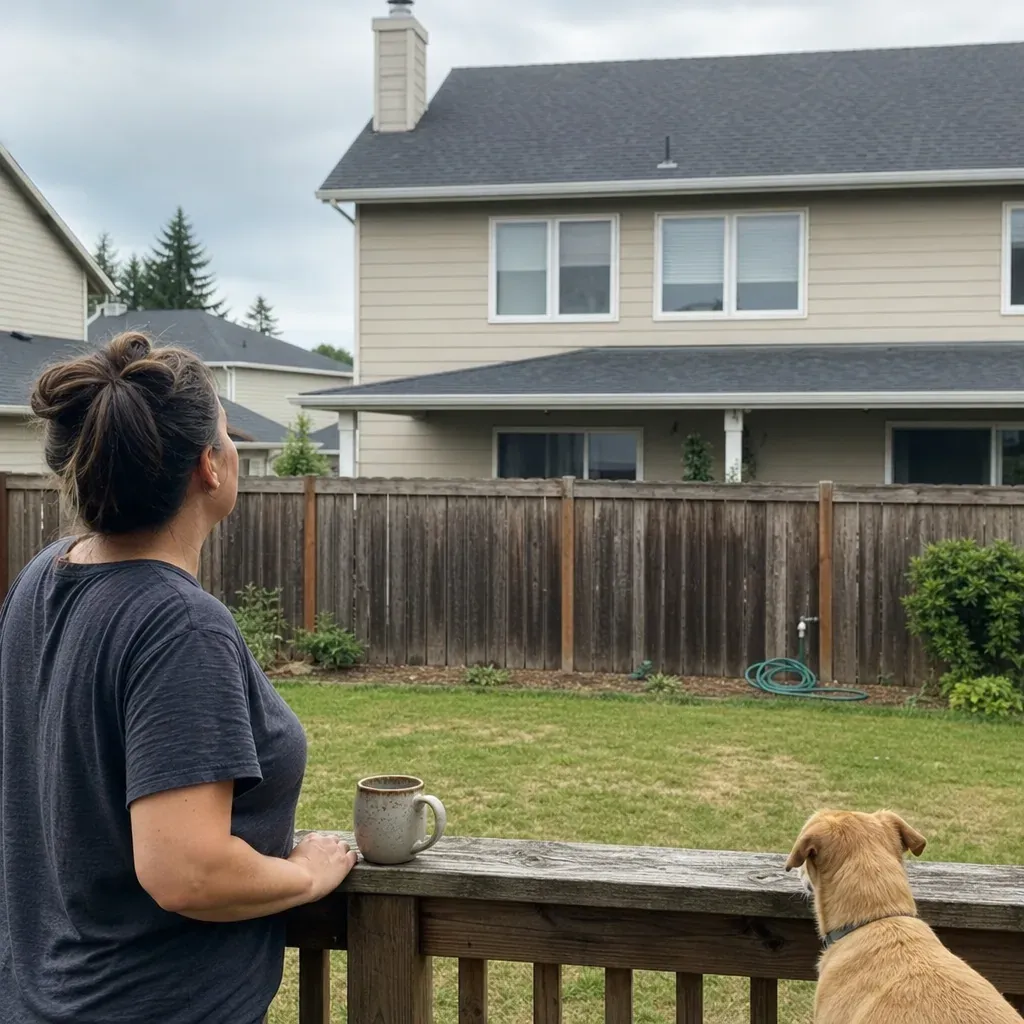
How to block your neighbor's view of your backyard in Salt Lake Valley
Where your neighbor can actually see from, what Salt Lake City allows for fences and hedges, and when a fence beats a hedge.
Making a fence taller won't always block the view, especially if your yard is on a slope or your neighbor has a second story. Cities and HOAs also set limits on how tall a backyard fence can be, so you can't just build to the sky. First figure out exactly where they're looking from, then plan your privacy fence around that sightline.
On this page
Why 'taller is better' isn't the right starting point
The natural instinct is to build as tall as the city allows. That makes sense, but height is only one piece of the puzzle, and often not the most important one.
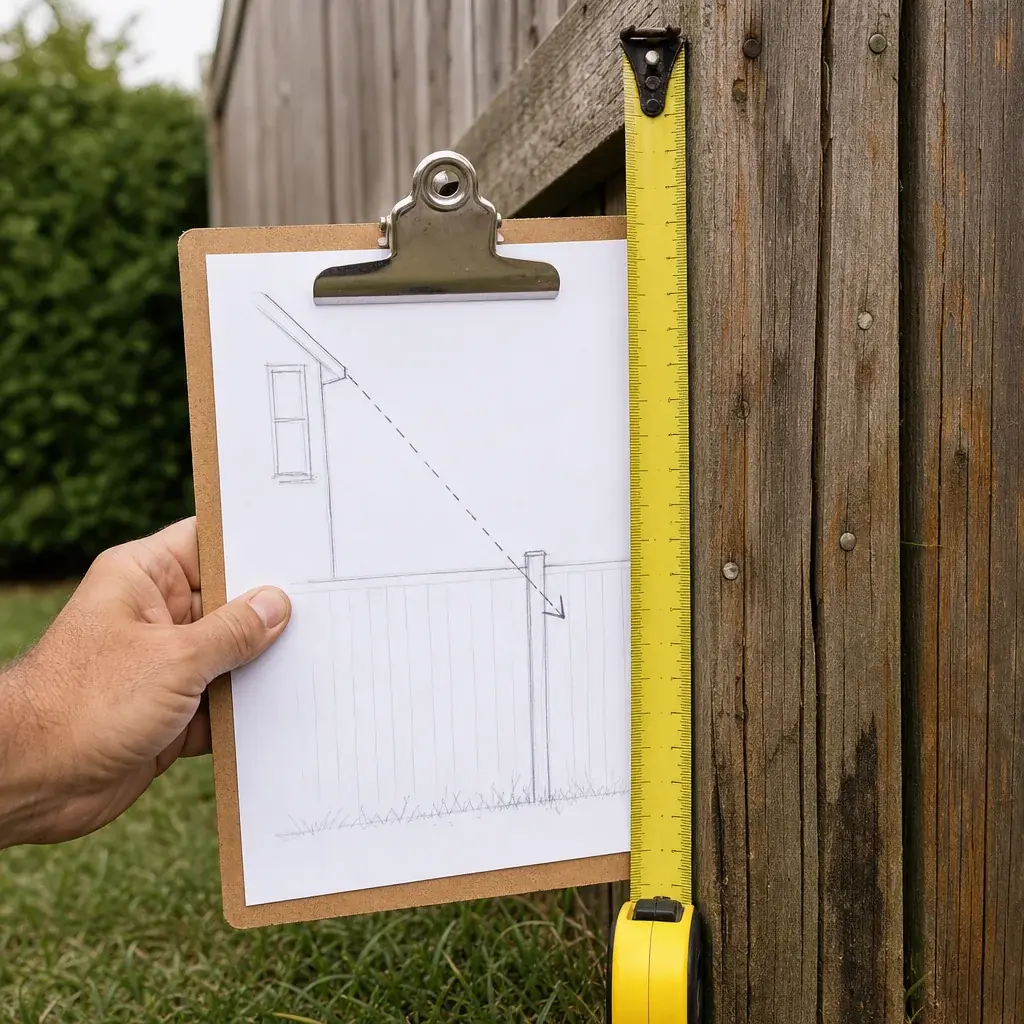
So think about it for a second. Where does your neighbor stand when they can see into your yard? Are they on level ground, or looking down from a second-story window or a raised deck?
That one question matters more than it seems. A six-foot fence does a fine job against someone standing next to it on flat ground. It does nothing against a window one story up. And on the east bench, or on the hillside lots in the Avenues, your neighbor's yard can sit above yours, so the fence line itself may not be the problem.
Then there are the rules. In Salt Lake City, the fence, wall and hedge rules cap height at 4 feet between the front property line and the front of the house, and at 6 feet at or behind the front of the house. A fence needs a permit from Building Services, and it has to sit entirely within your own property lines. On a corner lot, no solid fence, wall or hedge can be taller than 3 feet within 30 feet of an intersection where two streets meet. Other cities set their own limits, and HOAs can add rules on height, material and color. Push past them and you could end up redoing the work. Nobody wants that conversation after the posts are in the ground.
If you live in one of Salt Lake City's local historic districts, such as the Avenues, Capitol Hill, Central City, University or Yalecrest, there's another layer. The city always requires a Certificate of Appropriateness for a fence there, and its preservation handbook asks for a "transparent" quality in replacement fences and advises against solid fences with no spacing between boards. A tall solid screen is the opposite of that, so in a historic district the sightline plan matters even more.
Height also changes how a fence has to be built. A taller panel catches more wind, and Salt Lake Valley gets canyon winds. My crew sets posts two feet deep in concrete, and gate posts and eight-foot fences go deeper, so the extra height has something solid underneath it.
One more local step before any post hole gets dug: a Blue Stakes locate request goes in at least three business days before digging. It's free, by calling 811 or requesting online.
Here's a prime example. A homeowner in Sandy wanted an eight-foot fence along her back property line. But when I walked the yard with her, the fence line wasn't the problem at all. It was her neighbor's upstairs window, looking straight onto her patio. A taller fence wouldn't have done a thing. Instead, a shorter privacy section placed a little closer to her patio blocked the view completely, and it stayed well within the HOA rules.
So before you pick a height, I'd tell folks to take about 20 minutes and walk through these steps. It'll save you a lot of second-guessing.
- Sit in the spot where you want privacy, like your patio, hot tub, or kitchen window.
- Look for every place someone could see you from, including upstairs windows and decks.
- Have a friend stand at your planned fence line holding a pole marked at six feet.
- From your seat, check whether the pole blocks the view. If it doesn't, the fence may need to sit closer to you, or only a section of it may need to be taller.
- Before you settle on any height, call your city and read your HOA rules.
The answer often isn't a taller fence at the property line. It may be something closer to the house, or a mix of fence sections and planting. Grading, drainage and even a neighbor's new shed all affect where a privacy fence will do the most good.
That's why I walk the line before I quote. I'm not just measuring a straight run; I'm looking at sightlines and the slope of the land. Plumb, level and square starts with putting the fence in the right spot.
Backyard privacy ideas that work
Not every privacy idea holds up once you've lived with it. Some look great in photos and don't last outdoors. Plants that drop their leaves block the view in summer and not in fall. So let's talk about what holds up in a typical Salt Lake Valley backyard.
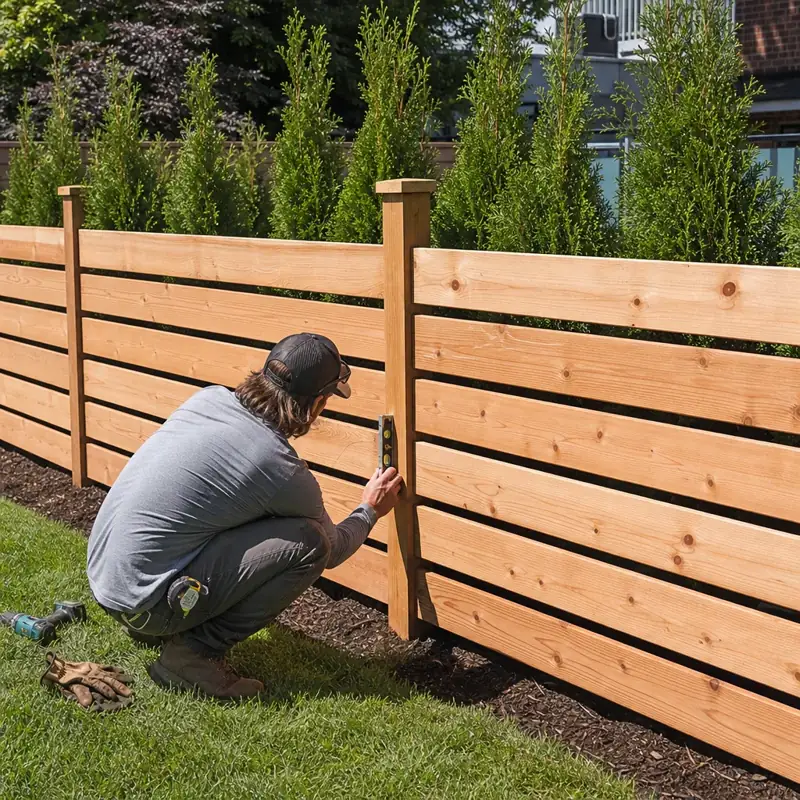
Here are the options, roughly from most reliable to least:
- Solid privacy fence options: board-on-board cedar, tongue-and-groove vinyl, or composite panels. Built solid, they block sightlines all year.
- A shadow box fence lets wind pass between the boards and looks finished from both yards.
- Evergreen trees like arborvitae along the property line. They take years to fill in and need regular watering.
- Pergolas or shade sails, for blocking views from a second-story window above you.
- Freestanding screens or tall planters, for a smaller patio or hot tub nook.
Plants are the slow route, I'll tell ya. Arborvitae planted as a screen leave gaps between plants until they fill in, and that takes years, not weeks. Salt Lake City gets about 15 inches of precipitation a year, so a hedge that doesn't get watered regularly can struggle.
A fence, though? It works on day one.
Take one family in the valley who spent two whole summers babying a row of shrubs along their back line. Half of them browned out by August. They had me come out and take a look at the yard, and a six-foot vinyl fence fixed their problem in a few days.
A fence only works if it stays put, so the build matters as much as the material. Water in the soil freezes and expands, and that frost heave can lift and shift whatever is sitting in the ground. My crew sets posts two feet deep in concrete, and gate posts and eight-foot fences go deeper.
Height rules matter here too. The limits above are for Salt Lake City, so check your own city and your HOA before you build. A fence that doesn't meet code can mean taking it down and starting over.
What about a neighbor's upstairs window? A fence can't block a view from above. For that, pair the fence with a pergola, a shade sail or a tall tree in the right spot. A solid fence for the lower view plus something overhead covers both angles.
Try this before you pick a height: sit in your favorite patio chair and have someone stand where your neighbor usually stands. You'll see how tall the fence really needs to be, and whether one taller section or a well-placed tree would do more good than raising the whole fence.
Want to see what's involved? Learn more about our privacy fence installation.
Privacy fence vs. hedge: timeline and permanence
Look, both a hedge and a privacy fence can block your neighbor's view. They just don't get you there on the same timeline, and they don't age the same way.
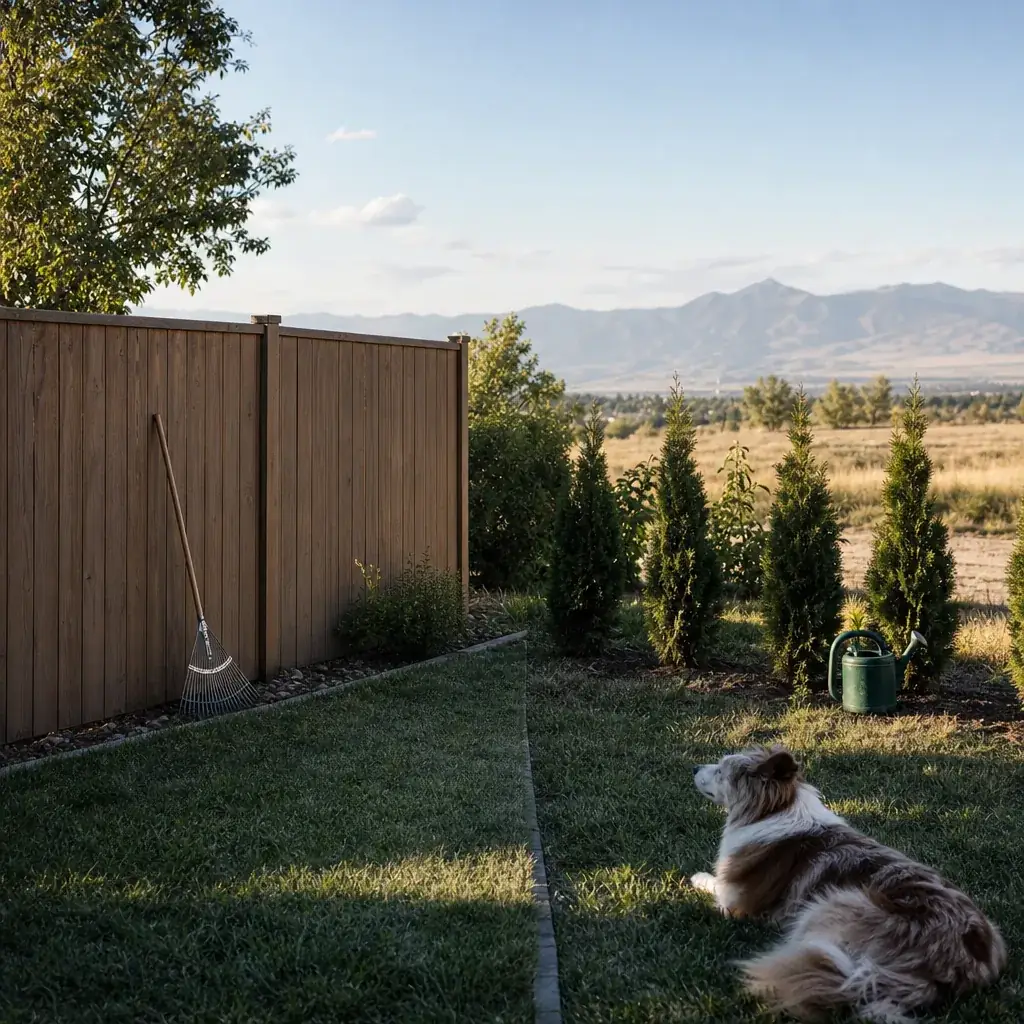
A fence works on a short clock. Once the posts are set and the concrete cures, the panels go up fast. Most residential fences take one to three days on site once the materials arrive.
A hedge is a different story. You plant it, you water it, and then you wait. Arborvitae planted as a screen are narrow, with daylight between plants until they fill in. In a dry climate like ours, regular watering is what keeps them growing.
Take another family, in Murray, who planted a row of arborvitae along their back line. Three summers later, the neighbor's upstairs window was still looking right down onto their patio. The bottom branches had thinned out, two plants had died after a tough winter, and the gaps were worse than they were in year one. They called us for a privacy fence and kept the healthy plants as a softer layer in front.
What about permanence? A fence is the same height in year five as it was in year one. It doesn't thin out or brown from winter burn. A cedar fence needs staining or sealing now and then, but vinyl and composite need much less upkeep.
Hedges need trimming and regular water. Miss a dry summer and you could lose a section, and then you're back to waiting.
To be fair, a hedge has its own appeal: it looks softer, and it doesn't need a solid wall to screen a view. But in Salt Lake City the same height limits apply to hedges as to fences, so a hedge generally won't get you past 6 feet in a side or rear yard. HOA rules can reach plants too, so ask before you pick your path, especially if your neighbor has a two-story deck.
Not sure which way to lean? These questions can settle it.
- Do you need privacy this season, or are you okay waiting a few years?
- How much time can you realistically commit to watering and trimming each summer?
- Does your HOA limit fence height on your back or side lines?
- Is the view you're trying to block at ground level or coming from a second story?
- Could putting in a fence now, with some plantings in front later, give you the best of both worlds?
Fence first for instant privacy, then plants later for a softer look, is one way to get both.
One more thing about permanence: a fence only lasts if the posts stay put. I write every quote myself, and my crew sets posts two feet deep in concrete, with gate posts and eight-foot fences deeper. Plumb, level, square.
A fence built right keeps working year after year.
Watch
Watch: how to block your neighbor's view of your backyard
Loads only when you press play, so it never slows the page down.

Written by
Landon Mickelson
Owner & Estimator, Trusted Fence Company
Landon Mickelson was born and raised in Utah. He got his start in the fencing industry in 2024 before teaming up with his professional building partners to found Trusted Fence in 2025. He brings a personal, thoughtful approach to an industry filled with contractors trying to make a quick buck at your expense.
Frequently Asked Questions
Is it illegal for my neighbor to look over my fence? +
Not by itself. Utah's voyeurism law (Utah Code 76-12-306) covers someone who views a person, without their knowledge or consent, with the intent of seeing a part of the body that person has a reasonable expectation of privacy about, in circumstances where that expectation applies. A neighbor glancing into your yard from their own property isn't that, but whether a specific situation crosses the line is a legal question, and I build fences, I'm not an attorney. If it's more than an annoyance, talk to an attorney or local police. For everyday privacy, the fix is on your side of the line: a fence, a screen or plants.
Who pays for a fence between neighbors in Utah? +
It depends on whether you and your neighbor agree to build together. Utah's fence chapter (Agricultural Code 4-26) says people who agree to a shared fence split the cost by the amount of land enclosed, and it lets qualified agricultural or grazing landowners ask an adjoining qualified landowner to pay half. It doesn't set a general rule for a typical backyard, and I'm not an attorney. In Salt Lake City, the city's rules say a fence has to be built entirely within the property lines of the lot it serves, so check with Building Services before agreeing to build one on the line. If you want a shared fence, agree on it with your neighbor in writing before anyone builds. If you'd rather not, a privacy fence on your own side is your own project.
How do I figure out where my neighbor can see into my yard? +
Sit in the spot you want private, like your patio or hot tub, and look around for every angle someone could see you from. Check upstairs windows, decks and raised yards, not just ground level. A six-foot fence blocks someone standing nearby, but not a second-story window. Mapping these sightlines first helps you place your fence where it works.
Do trees or hedges work better than a fence for backyard privacy? +
Trees and hedges can work, but they take years to fill in and need regular watering, and Salt Lake City gets about 15 inches of precipitation a year. A fence blocks the view the day it's installed. If you want both, a fence first and plants later gives you privacy now and a softer look over time.
Why do bench lots on the east side of Salt Lake Valley make privacy harder? +
Bench lots sit on sloped ground, so a neighbor's yard can sit higher than yours, and the same goes for hillside areas like the Avenues. In Salt Lake City, fence height is measured from the finished grade of the property the fence serves, so a neighbor's higher yard doesn't change how tall your fence can be. A standard fence that would block a flat-ground view does much less in that case. A good plan accounts for the slope, and sometimes the answer is fencing closer to your patio instead of along the property line.
How does frost and ground movement affect a privacy fence in Salt Lake Valley? +
Frost heave is when ice forms in the soil and lifts the ground. It takes freezing temperatures, soil prone to frost, and available water. Salt Lake City averages about 112 days a year with a low at or below freezing, so frost is a regular part of the year here. My crew sets posts two feet deep in concrete, and gate posts and eight-foot fences go deeper. Taller fences also catch more wind from canyon gusts, which is another reason post depth matters.
Straight lines. Straight answers.
Free on-site estimate, a written price that does not move, and a same-day response when you call. Anywhere in Salt Lake County.